
Cheyenne County Criminal Docket Searches
For a hearing date, open the Colorado Judicial Docket Search filtered to Cheyenne County. Pick the 15th Judicial District, Cheyenne County, and County, District, or Both. The form needs a date plus one more filter. A case number works best. But a party name, attorney, division, or case class will also narrow results. Choose CR for a District Court felony. Choose M for a County Court misdemeanor. Use T and R when the citation points that way.
The free calendar is only part of the Cheyenne County criminal register of actions. Colorado Judicial points to fee-based, approved vendors like CoCourts for the full chronology. Vendor data helps. But it is not the official file, and a case or case type may be missing. To get an official register, Complaint/Information, Ticket, Protection Order, or Disposition/Sentence Order, file the state Record/Document Request Form. Choose Cheyenne County and describe the document precisely.
You can also go straight to the clerk. Call the Cheyenne County Combined Court clerk at 719-767-5649, email colleen.palmer@judicial.state.co.us, stop at the counter at 51 S. 1st St. in Cheyenne Wells, or mail a request to P.O. Box 696, Cheyenne Wells, CO 80810. The location page lists fax 719-931-0022. Confirm the fax works before sending payment or protected facts. No public terminal is offered at the courthouse.
Cheyenne County Criminal Docket Classes
The case class points you to the right court. Felony matters sit in Cheyenne County District Court. Misdemeanors and traffic cases belong to County Court. Early felony proceedings start there too when the law places that first step there. Both courts operate from the Combined Court at the same courthouse, and one clerk office maintains all their files. The shared counter does not blur the line between District and County Court jurisdiction.
| Case clue | Likely court | Useful search choice |
|---|---|---|
| Felony charge | Cheyenne County District Court | District and CR |
| Misdemeanor | Cheyenne County Court | County and M |
| State traffic matter | Cheyenne County Court | County and T or R |
| Town ordinance charge | Named municipal channel | Contact that town |
Municipal matters from Cheyenne Wells or Kit Carson stay with the town that filed them. Check the court name on the citation first. A town payment page is not a Cheyenne County criminal docket. It will not show county cases. Assume nothing about a municipal record showing up in the state Combined Court system.
Criminal Dockets: What They Show
A Cheyenne County criminal register of actions is a list in time order. It opens with the case number, court, and division. Next comes the filing date, status, caption, and public charge information. Later entries may name counsel and bond activity. They may also list filings, minute orders, court settings, plea events, trial, disposition, sentence, financial activity, and appeal steps. What you can see still turns on access law, redaction, and case status.
| Header | Year, class, sequence, court, division, filing date, and status. |
|---|---|
| Charge block | Public offense description, statute, count, and level when shown. |
| Events | Filed papers, motions, minute orders, hearings, continuances, and rulings. |
| Settings | Date, time, division, and proceeding type, subject to later resets. |
| Outcome | Count-level disposition, sentence activity, and later review where public. |
Commercial vendors give index data, not filed images. If one entry decides an important question, order the document behind it. A motion entry means someone asked the judge to act, not that the request was granted. The order shows the ruling.
Cheyenne County Criminal Docket Traps
Short labels can mislead. “Filed” and “decided” mean different things. A plea alone does not reveal the sentence. “Closed” does not say how each count ended. A reset leaves the old date in the history, and the newest valid notice controls, so read the lines before and after any key entry.
- Disposition
- The recorded outcome of a charge or case. Read it count by count.
- Deferred judgment
- An outcome governed by an agreement and conditions; the signed order supplies the terms.
- Minute order
- A concise record of court action entered from a proceeding.
- Bond forfeiture
- A bond consequence after a triggering event, not the merits outcome of a charge.
- Appeal filed
- Review was sought; the trial register may later show record transmission.
When the docket says only “disposition,” order the Disposition/Sentence Order. The Cheyenne County clerk form also lets you request the Complaint/Information. Those two documents answer what shorthand cannot.
Criminal Case Stages on the Docket
The usual record path is Filing → Advisement or Arraignment → Pretrial → Plea or Trial → Disposition → Sentencing. Actual Cheyenne County criminal cases can branch, return to an earlier step, or end before trial. Bond hearings, motions, competency issues, continuances, and later probation activity can add entries. The register must be read as a timeline, not as a checklist that every case completes.
Advisement covers rights and the charge. It also covers custody, bond, and next steps. Arraignment is where the formal charge is addressed and a plea is entered. A pretrial conference reviews status, negotiation, motions, and readiness. The plea or trial entry records the path to a merits outcome. Sentencing follows a conviction or accepted plea. Post-sentence motions and appeals can keep the docket active after the first disposition.
For a current hearing, trust the newest court notice. Then check with the Cheyenne County clerk. Old settings still explain delay and sequence for the case. But a past arraignment or trial date is not proof the event is still set.
Cheyenne County Criminal Docket Outcomes
Each count can end differently. One may be dismissed while another ends in conviction. A not-guilty or acquittal entry means the count resolved without conviction after adjudication. A deferred judgment or sentence carries terms. The label alone cannot show them. Later modification, probation, revocation, or appeal activity can change what follows that first sentence entry.
- Guilty or convicted: an adjudication or accepted plea resulted in conviction.
- Not guilty or acquitted: the charge ended without conviction after adjudication.
- Dismissed: prosecution ended the count or case as the exact entry records.
- Sentence imposed: the court entered the penalty or other sentence order.
- Probation or revocation: supervision began, or later violation activity returned to court.
When legal effect matters, the signed disposition or sentence order is the safer source. A public register points the way to it but does not replace it.
Cheyenne County Criminal Docket Courts
Criminal work in Cheyenne County runs through a small, unified courthouse structure. The 15th Judicial District covers Baca, Cheyenne, Kiowa, and Prowers Counties. Two district judges travel across the district. Each county has a part-time county judge. Given that arrangement, the court type, division, and latest setting fields tell you more. A fixed local judge calendar is a bad assumption.
The district's official FY2024 overview reports 68 total District Court filings and 354 total County Court filings for the county. Those figures span all case categories, not just criminal ones, so treat them that way. They still explain why the County Court calendar can carry a heavy local load. Felony cases stay in District Court.
Cheyenne County operates no separate drug, veterans, mental-health, or other problem-solving docket. Treatment or probation terms prove nothing by themselves.
Cheyenne County Criminal Docket Bond Settings
A bond hearing can appear as a Cheyenne County criminal setting, including weekend arrangements the district publishes. A public livestream may let you watch a proceeding. Watching is not appearing. The judge cannot see or hear you there. Using the stream in place of an authorized participant link can lead to a failure to appear. To take part remotely, contact the court for the participant Webex link and instructions. Recording, photographing, screen-capturing, or reproducing a proceeding without prior written authorization is prohibited. Also check the latest bond setting. A later continuance or reset may have changed it. The U.S. Attorney's Office for the District of Colorado page describes the separate federal prosecution channel, which sits entirely outside the Cheyenne County state docket.
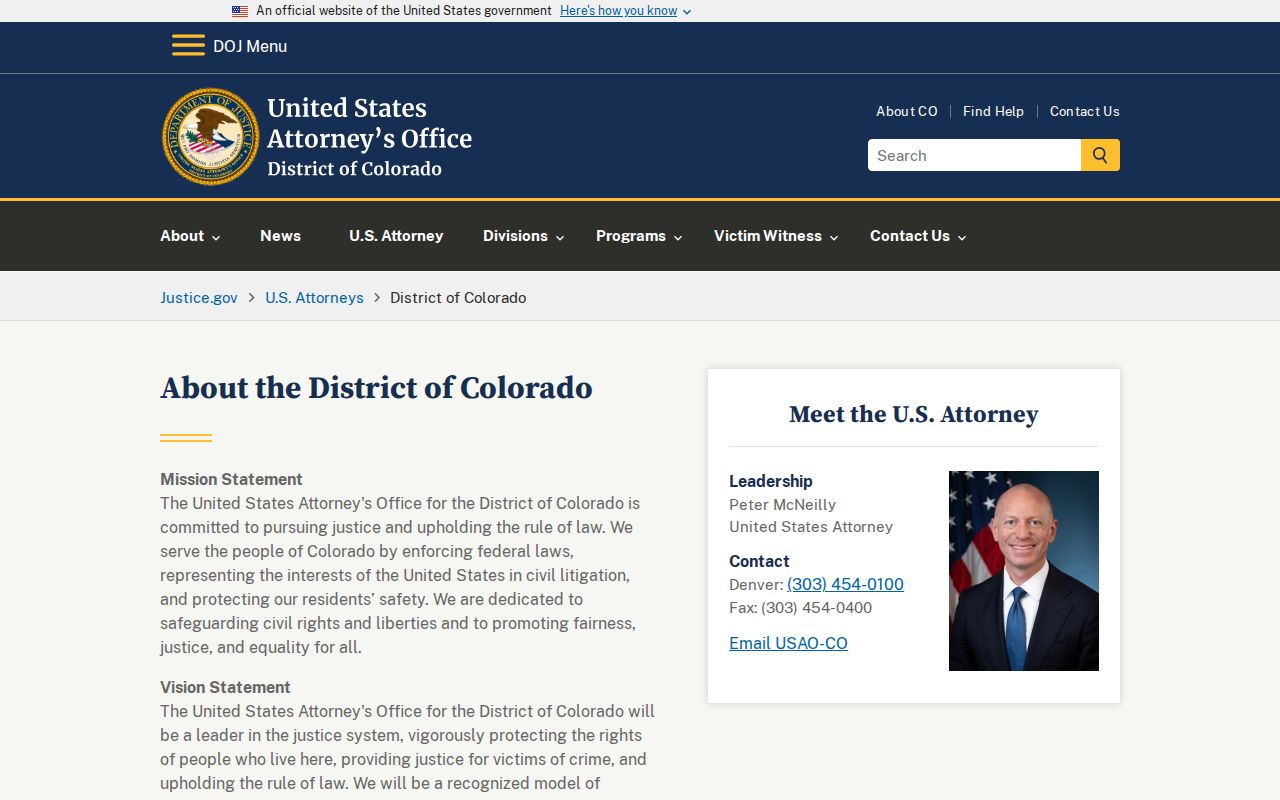
The line is simple. Colorado County and District Court cases travel the state channels, while a federal prosecution runs through the U.S. District Court for Colorado and PACER.
Access Rules for Criminal Dockets
Access to Cheyenne County criminal court records rests chiefly on Chief Justice Directive 05-01, Colorado court-access rules, and the Colorado Criminal Justice Records Act. The public may inspect and copy what is open. Remote access still is not the full official file. The clerk applies restrictions, redaction rules, and other lawful access limits before releasing anything. Juvenile records fall under the Children's Code. Role-based rules decide who may reach them. Sealed, suppressed, and protected matters may not surface in an ordinary docket search at all. That gap does not mean no case exists, nor that a filed case was dismissed. Check spelling, year, class, and court. Then ask the clerk about the correct lawful process.
Restricted records: Clerk staff cannot override a seal or statutory limit. Access may require photo identification, lawful authority, or a court order.
Missing Cheyenne County Criminal Docket Cases
A blank Cheyenne County docket result is often a search problem, not a missing case. Change one variable at a time. Confirm Cheyenne County is selected, not a neighboring county. Test County, District, and Both as the court. Also try the filing year and the CR, M, T, or R class. A daily docket search needs a date range plus an extra filter, so a blank result may only mean no event falls inside that window.
- Read the initiating paper for the exact court, case number, and party spelling.
- Search the free calendar for a setting, then use an approved ROA vendor for broader history.
- Submit the official request form for the ROA or named criminal document.
- Call the clerk about older, off-site, suppressed, or unclear records.
- Use a town clerk for municipal charges and PACER for federal criminal cases.
A name search by the Cheyenne County clerk carries the published $5 charge when the case number is unknown. Off-site retrieval can add actual cost. Ask for an estimate first.
Cheyenne County Criminal Docket Copies
A Cheyenne County criminal docket can point you to the document you need. The official copy still comes from the clerk. The online form estimates $0.25 per copied page, $20 per certified or exemplified document, and $5 for a name search. Parties and their lawyers face a published $15 copy maximum on their own case. Nonparties have no cap. Research or redaction work runs $30 per hour in quarter-hour increments after the first hour. The court normally responds within three business days. Circumstances can require more time. That is no promise for old or certified files. Give the clerk the case number, year, Cheyenne County location, party information, and the exact item. A narrow request is easier to quote. For the full lookup workflow, the county's docket search options lay out the daily calendar, paid register, and official request routes side by side.